


















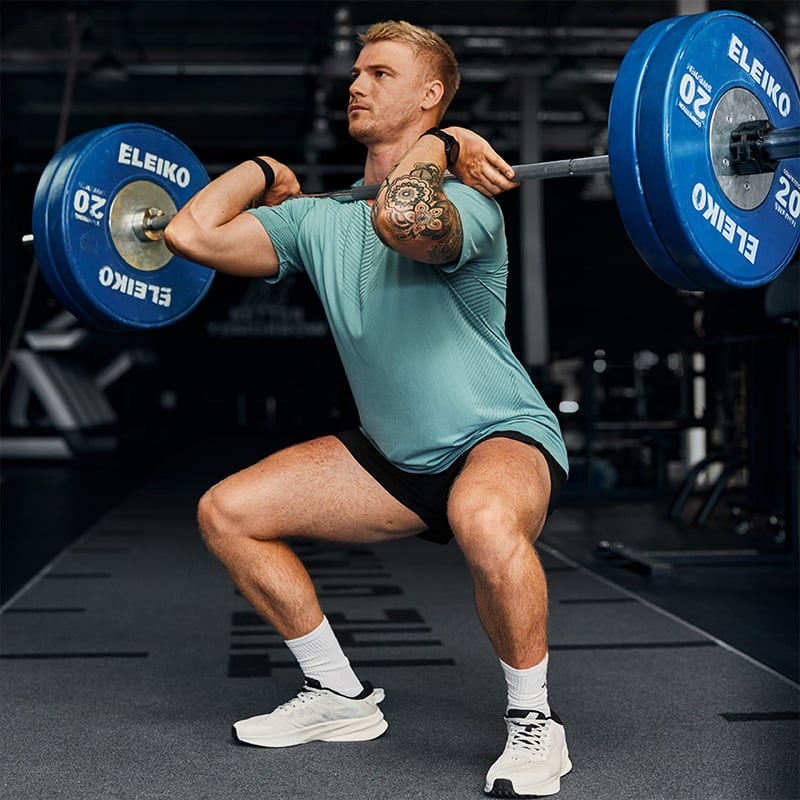
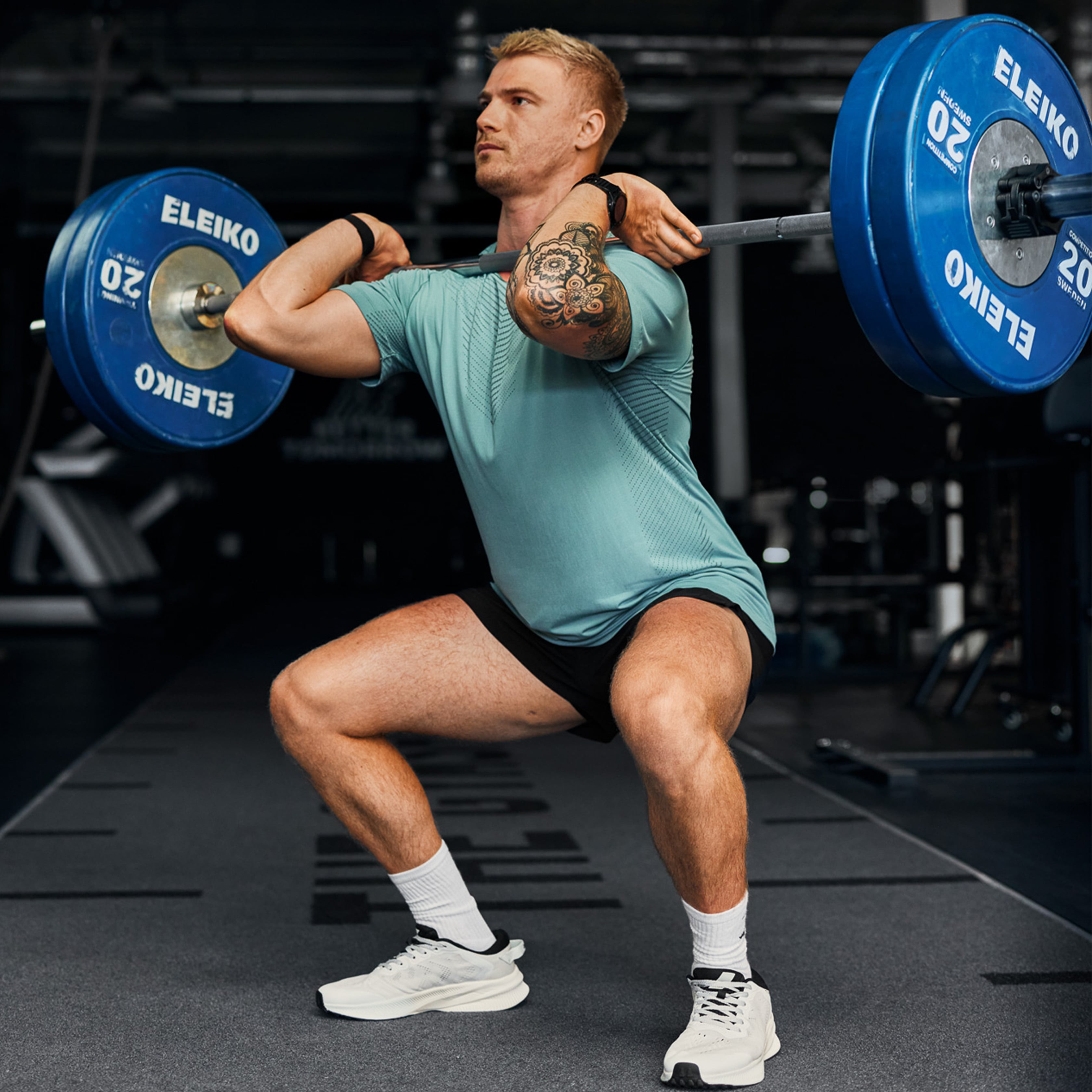
If there’s one truth in training, it’s this: it’s far easier to learn good form from the start than to unlearn bad habits later. And when it comes to squats, that couldn’t be more true.
The squat isn’t just another exercise—it’s one of the most powerful, functional, and foundational movements you can learn in the gym. It builds full-body strength, unlocks access to advanced lifts like deadlifts and Olympic movements, and reinforces the kind of movement patterns you use every single day.
Mastering your squat early sets the stage for long-term success—in your workouts, in your athletic performance, and in everyday life. And starting with the proper bodyweight squat technique lays the groundwork for smooth progress when it’s time to add weight.
But learning how to squat isn’t as easy as it looks–as soon as you start you realise you don’t know how low to squat, how wide to stand or how to stop your heels lifting.
Whether you're here to build confidence, refine your form, or finally figure out how low you really need to go, we’ve got you covered: In this guide, we’ll break down everything from your breathing and bracing techniques to squat depth and common form faults—so you can squat stronger, safer, and smarter from the ground up.
What Is A Squat?
A squat is a fundamental lower-body exercise and movement pattern in which you start from a standing position and then bend your knees and hips to lower your body down toward the ground, as if you’re sitting back into a chair. Once you reach the desired depth—typically when your thighs are parallel to the floor or lower—you push through your feet to straighten your legs and hips, returning to the standing position.
Sounds easy, right? Well, performing the squat correctly actually demands involvement from multiple muscle groups, including those in the legs, core, and back.
One of the most unique things about squats is their versatility: Look to one side of the gym, and you’ll see a powerlifter loading up 300 lb+ for their back squat, while the CrossFit athlete reps up 300 air squats as they chip their way through ‘Murph’.
Squats can be performed using heavy loads and low reps to build power and strength or using only body weight to build endurance and cardio—both are effective, but work to different goals. Squats really can be whatever you make of them and can be used by beginners as well as professional athletes.
How To Do Squats
The first step to squatting is to master the bodyweight squat (also known as air squats). Here’s how to do them with perfect squat form:
Stand with feet slightly wider than hips, toes pointing forward, or slightly out.
Clasp your hands in front of your chest or hold your arms out straight for balance, keeping your chest proud. Take a deep breath into your core.
Bend your knees, pushing your hips back, until your thighs are parallel with the floor, knees bent at 90 degrees, traveling in line with toes.
Drive out of the squat, pushing through your heels to straighten your legs. Squeeze your glutes at the top.
Repeat for the prescribed rep range.
Tips From Lifting Club Manager & Personal Trainer, Samantha Cubbins:
'If you struggle to know how low to squat, use a box or a bench as a guide to hit depth. Adjust the height of the box or bench to suit your needs and progression.'
Squatting parallel isn’t easy, and you may need to work on hip and ankle mobility to help you get there. If this is the case, you could always start with a higher box and then gradually transition to a lower box as your mobility progresses.
‘You could also add a heel lift temporarily by lifting the heels slightly using small weights or lifting shoes. This will compensate for poor ankle mobility and help you reach depth more easily (but should only be used as a temporary aid).’
5 Squat Form Tips
Maintain a neutral spine: Ensure your back doesn’t round, particularly as you push up from the squat. Keeping your core braced throughout the movement can help.
Beware of the butt wink: This is where the lower back rounds at the bottom of the squat, causing the pelvis to tuck under. If you can’t reach full depth without a butt wink, then adjust your depth to avoid your pelvis tucking under. Taking a wider stance or working on ankle and hip mobility can help fix a butt wink.
Think about driving your knees out: Don’t allow them to cave in, as this puts unnecessary stress on the knees and could lead to pain or injury, particularly when you add load.
Keep your toes through mid-foot to heel: Your heels should not come off the floor when you squat. If you still struggle to keep your heels on the ground, this is a sign you need to work on ankle mobility. You could also try placing a small weight plate under your heels or investing in some weightlifting shoes, which will make it easier to keep your heels in contact with the floor while hitting full depth.
Squat to depth, but do it safely: Squatting to parallel (or slightly lower) may be the gold standard, but that doesn’t mean everyone can do it, especially not at first. Sam recommends working on
‘ankle, hip, and thoracic mobility, adjusting your stance, and practicing bodyweight squat holds at the bottom to get used to the position and to build strength and stability at full range.’ In the meantime, it’s important to only squat as low as you can whilst keeping a neutral spine.
@vikkihillpt Episode 1 | Learn squat basics with me in @Gymshark pro bench in london (book a free PT session with me on their app!!) #gymshark #probench #gymsharkwomen #howtosquat #howto #glutes ♬ Aesthetic - Tollan Kim
What Muscles Do Squats Work?
Squats can be heavy work, so it’s hardly surprising that multiple muscle groups get involved. But that’s a big reason this compound exercise is so great – you only need this one action to hit numerous muscle groups simultaneously.
Muscles Activated During Squats:
Squats require good trunk stability in addition to the leg muscles. The core muscles must be engaged to prevent upper back rounding, particularly when adding weight.
If you’re performing weighted squats, you’ll likely activate your shoulders, arms, chest, and back to help support the weight.

What Are The Benefits Of Squats?
Bigger, stronger legs: This one’s probably no surprise, but squats build both size and strength in the lower body, recruiting the quads, glutes, and hamstrings to power through the movement. ‘Training legs stimulates the release of growth hormone and testosterone, which support muscle growth and overall health,’ notes Sam. Research has proved this is true of both bodyweight squats and squats using resistance (i.e., barbell squats) [1].
Improve mobility: It may look easy to rep out 10 air squats, but mastering the form of a squat requires good ankle and hip mobility. The more you practice, the more mobile you’ll become, and you’ll find your core stability improving, too.
Functional gains: Being strong in the gym is one thing, but what about being fit for everyday life–well, it’s even more important. ‘My favorite benefit of squats is that they mimic real-world movements like sitting, standing, and lifting. This makes daily tasks easier and helps prevent falls/injuries as you age,’ explains Sam, which research supports [2].
Calorie burner: Trying to shift some weight but tired of slogging away on the treadmill? You’re in luck: Research by Harvard Medical School found that 30 minutes of weightlifting (such as squats) can burn between 90 and 126 calories, whilst vigorous weightlifting can burn up to 252 calories [3]. For best results, choose a barbell squat over body weight, as research has proven this weighted variation to be most effective for fat loss.
Variety: As mentioned, squats are one of the most versatile exercises in the book. From bodyweight to barbell, dumbbell to machine, there are so many different ways to squat. Switching between squat exercises not only makes your workout more interesting but also has physical benefits. It challenges your muscles in different ways to build a balanced physique and leads to further increases in skill.
How To Add Weight To Squats
‘Adding resistance to your squats will increase muscle strength and hypertrophy, enhance functional strength and performance, as well as increase caloric burn during and after your workout due to EPOC (Excessive Post Oxygen Consumption or the ‘afterburn effect’, whereby the body increases oxygen intake after exercise in order to return to its resting state).’
Bodyweight squats can be turned into weighted squats in a number of ways, for example, by using a:
Barbell (e.g., front or back squats)
Kettlebell(s) (e.g,. goblet squat or front squat)
Dumbbell(s) (e.,g. goblet squat or front squat)
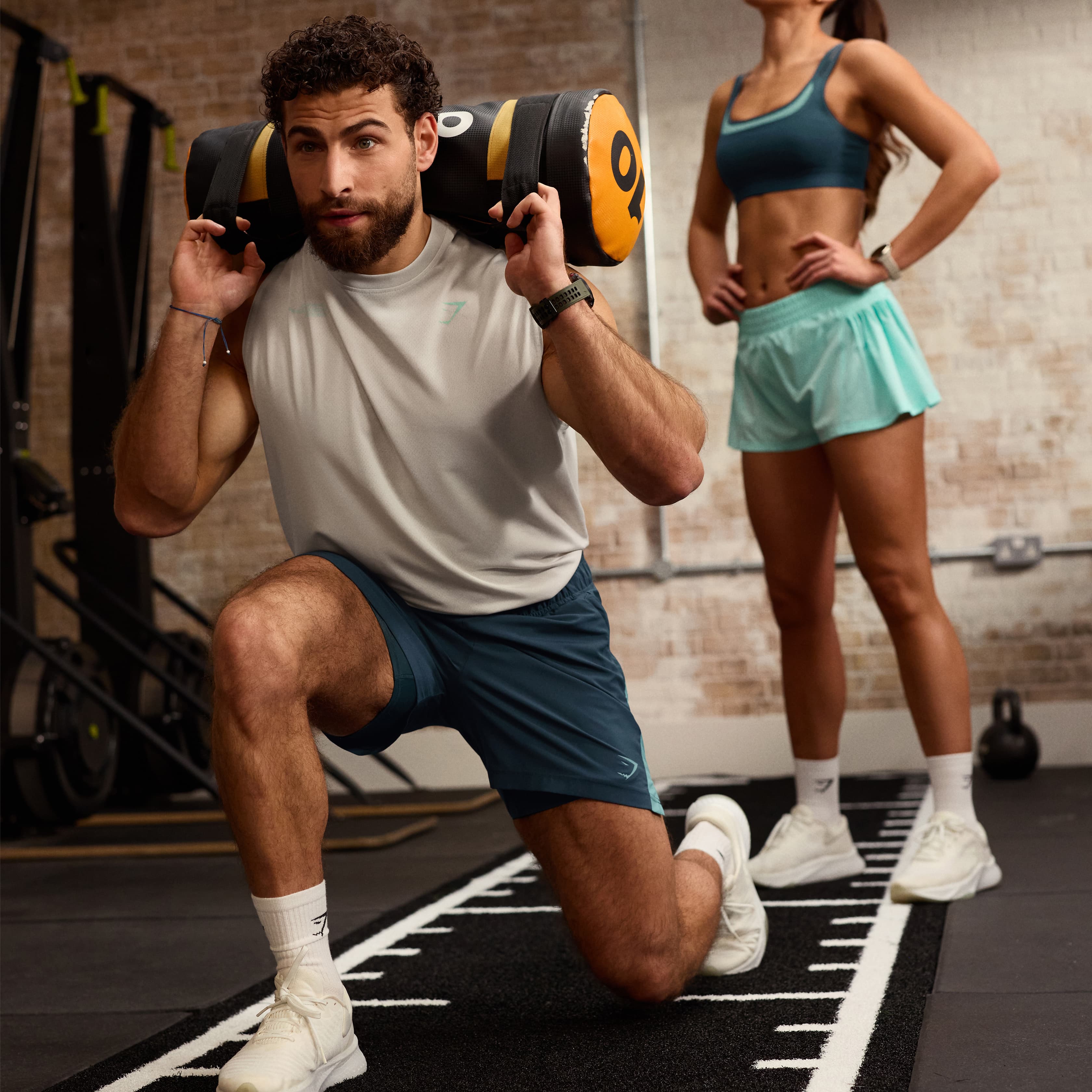
Sandbag (e,.g. front squat)
Machine (e.g., Smith machine squats, hack squats or belt squats)
Resistance band, (e.g., mini band or long band squats)
Ready To Squat?
Learning to squat might seem straightforward, but investing the time to master proper form from the beginning is one of the smartest moves you can make. It not only makes progressing and adding weight safer and easier, but also helps prevent bad habits that can limit your long-term potential.
If you’re finding it hard to increase your squat weight, dealing with persistent aches, or just feel like your form isn’t quite right, don’t ignore it. Take a step back, reduce the load, and refocus on your technique. It’s time well spent.
Film yourself (or get your gym buddy on hand) and compare your form against the key points outlined above.
It may feel tedious, but trust us, spending time building a strong squat will massively help you across almost all exercises in the gym–whether you’re chasing a new back squat PR, refining your squat cleans, or powering through a faster Hyrox sled push. Strong squats build strong athletes.
FAQs
What’s The Best Way To Stand When Squatting?
A couple of commonly contested squat variants are toe position and stance width.
A study found that toes should be pointing forward or slightly out, but not more than 10 degrees, to allow optimal joint movement and reduce injury risk [6]. That being said, everyone’s body is different, and whilst this may work for most people, some lifters may find a narrower or wider stance width, or varying toe angle, more comfortable. You may want to experiment with different stances to see which feels more natural and allows you to perform the squat (exercise) with the best form.
The width of your stance may also vary depending on the muscles you want to target. A regular squat exercise is performed in a neutral stance (feet just outside the hips), targeting the quads, hamstrings, and glutes. Take your feet wider (into a sumo squat) and you’ll fire up the glutes more. Take them narrow, and your quads must take most of the heavy work. Think about your goals and tailor your squat position accordingly.
There is no set right or wrong answer as long as you maintain your form, but the above recommendations should hopefully point you in the right direction.
How Low Should I Squat?
A full squat is generally regarded as reaching parallel – knees bent to 90 degrees, thighs parallel to the floor. Research by California State University found this is the optimum depth to achieve very high activation levels in the quads, hamstrings, and glutes [7].
Sometimes, lifters intentionally don’t squat to full depth and instead perform a ‘half-squat’, stopping at the point between parallel and standing. This may be suited to those trying to increase their mobility and range of motion, or those trying to build strength in the ‘sticking point’ of the squat (the midpoint, whereby pushing into the top portion of the squat is the hardest). The half squat also mimics the power position of the snatch and the clean, helping to build power and strength in the receiving positions.
Always prioritize form over depth. Your anatomy will largely determine how low you can squat, but putting in time to work on mobility can really pay off. If you’re struggling, try our mobility exercises to improve your squat depth.
What Is The Best Breathing Technique To Use When Squatting?
Proper breathing allows more oxygen into your bloodstream, directly feeding the muscles to lessen fatigue, and can create a rock-solid core for stability. Taking a big breath into your belly is essential when lifting heavy loads on your back, providing a strong, stable base and protecting your spine throughout the movement.
A good trick when working out how to breathe correctly when squatting is to imagine you are standing in chest-high water:
Set your feet in a squat stance with the bar on your back. You are above the water, so take a deep breath into your belly and brace your core.
Squat down, as if you are now going underwater. Hold the air in your belly and keep the core tight.
Exhale when you get back to the starting position, legs fully extended.
Take another breath and start your squat again.
For extra support, wearing a lifting belt can help with breathing and bracing, increasing intra-abdominal pressure (tension within the core) by as much as 30-40% [8].
Why Do My Knees Hurt When I Squat?
Knee pain during squats indicates something isn’t right, but pinpointing why can be a little tricky.
Common reasons for knee pain during squats include:
Squatting incorrectly
Lack of ankle or hip mobility
Weak glutes
These causes can usually be remedied by doing specific mobility or activation exercises. It can be helpful to film yourself squatting or get a personal trainer to check your form to help identify where the issue may lie.
If you’re cautious about squatting heavy due to your knees, it’s worth investing in some knee sleeves. These help stabilize the knee joint and encourage blood flow to minimize pain when squatting [9].
Still struggling? Knee pain is not something you should carry on squatting through. If your pain continues or worsens, you should seek guidance from a fitness professional, physio, or doctor.
How Much Should I Squat?
This will vary depending on the type of squat you are performing and your experience level.
If you’re a beginner, you will want to start with bodyweight, nailing your form first, before moving on to machine squats, goblet squats, and, eventually, a barbell squat.
As a general rule of thumb, you’ll be able to squat the most weight using a machine, then a barbell squat, followed by dumbbell and kettlebell squats, and then finally, bodyweight squats, which don’t require any external loading at all to be effective [1]!
To determine your load, you need to:
Define your goal: Strength gains, hypertrophy, or building endurance?
Set your rep range and sets: 1 to 6 reps (strength), 6 to 12 reps (hypertrophy), and 12-20 reps (endurance). You’ll complete these for 3 to 6 sets.
Choose a weight that you can manage for all the prescribed reps. Sometimes, you may increase the weight for each set, but your starting weight should be something you can realistically complete every rep with while maintaining proper form.
How Much Does A Squat Bar Weigh?
An Olympic barbell weighs 45 lbs. It is the most common bar used in commercial gyms. Many gyms also have a women’s Olympic barbell, slightly shorter, thinner in diameter, and lighter, at 33 lbs.
It doesn’t matter much which bar you choose for front squats and back squats, as you don’t have to grip the bar as you would for an exercise like deadlifts. Remember that whatever bar you choose, its weight will count towards the total number you lift.
How Many Reps And Sets Should I Do?
The number of sets and reps you select will vary depending on your goal.
The general range for different goals is as follows:
Strength Building: 3 to 5 sets of 2 to 6 reps per exercise
Hypertrophy (muscle growth): 3 to 4 sets of 6 to 12 reps.
Muscular Endurance: 2 to 3 sets of 12 to 20 reps.
Your goal will then determine the weight you use. It must be a weight for which you can perform the prescribed reps and sets without sacrificing form.
That being said, if you’re a beginner who has never squatted before, you will likely perform bodyweight squats, light goblet, or machine squats. Whilst your long-term goal may be strength or hypertrophy, during this time, you may find yourself training in the muscle endurance range, using a higher volume and lower weight for the first few weeks. It’s important to master your form and get the technique right before loading the weight on.
How Should I Warm Up For Squats?
Spending a solid amount of time warming up for squats may not sound exciting, but trust us, it’s worth it! First, we’d suggest raising your heart rate and getting the blood flowing through your whole body. That might consist of a couple of minutes on the bike or rower.
Then, you’ll want to take your body through some dynamic stretches, focusing particularly on opening up the hips, mobilizing the ankles, and activating the hamstrings, quads, and glutes, which are all prime movers during the squat.
Try our Squat Mobility Warm-Up Exercises.
How Should I Cool Down After Squats?
At the end of leg day, you should take 5 or 10 minutes to do static stretches and maybe even foam roll. This works to prevent muscle tightness and the dreaded DOMS (delayed onset muscle soreness), meaning you’ll feel fresher the next day and get back to the gym feeling ready for your next session.
The key areas you’ll want to stretch are:
Hamstrings
Glutes
Hip Flexors
Calves
References:
Wei, W., Zhu, J., Ren, S., Jan, Y.-K., Zhang, W., Su, R. and He, L. (2023). Effects of progressive body-weight versus barbell back squat training on strength, hypertrophy and body fat among sedentary young women. Scientific Reports, [online] 13(1), p.13505. doi:https://doi.org/10.1038/s41598-023-40319-x.
Myer, G.D., Kushner, A.M., Brent, J.L., Schoenfeld, B.J., Hugentobler, J., Lloyd, R.S., Vermeil, A., Chu, D.A., Harbin, J. and McGill, S.M. (2014). The Back Squat. Strength and Conditioning Journal, [online] 36(6), pp.4–27. doi:https://doi.org/10.1519/ssc.0000000000000103.
Harvard Health Publishing (2021). Calories burned in 30 minutes of leisure and routine activities. [online] Harvard Health. Available at: https://www.health.harvard.edu/diet-and-weight-loss/calories-burned-in-30-minutes-for-people-of-three-different-weights.
Lorenzetti, S., Ostermann, M., Zeidler, F., Zimmer, P., Jentsch, L., List, R., Taylor, W.R. and Schellenberg, F. (2018). How to squat? Effects of various stance widths, foot placement angles and level of experience on knee, hip and trunk motion and loading. BMC Sports Science, Medicine and Rehabilitation, [online] 10(1). doi:https://doi.org/10.1186/s13102-018-0103-7.
Andersen, V., Fimland, M., Brennset, Ø., Haslestad, L., Lundteigen, M., Skalleberg, K. and Saeterbakken, A. (2014). Muscle Activation and Strength in Squat and Bulgarian Squat on Stable and Unstable Surface. International Journal of Sports Medicine, 35(14), pp.1196–1202. doi:https://doi.org/10.1055/s-0034-1382016.
Lorenzetti, S., Ostermann, M., Zeidler, F., Zimmer, P., Jentsch, L., List, R., Taylor, W.R. and Schellenberg, F. (2018). How to squat? Effects of various stance widths, foot placement angles and level of experience on knee, hip and trunk motion and loading. BMC Sports Science, Medicine and Rehabilitation, [online] 10(1). doi:https://doi.org/10.1186/s13102-018-0103-7.
Escamilla, R.F. (2001). Knee biomechanics of the dynamic squat exercise. Medicine and Science in Sports and Exercise, 33(1), pp.127–141.
Lander, J.E., Simonton, R.L. and Giacobbe, J.K. (1990). The effectiveness of weight-belts during the squat exercise. Medicine and Science in Sports and Exercise, [online] 22(1), pp.117–126. Available at: https://pubmed.ncbi.nlm.nih.gov/2304406/.
Beaudreuil, J., Bendaya, S., Faucher, M., Coudeyre, E., Ribinik, P., Revel, M. and Rannou, F. (2009). Clinical practice guidelines for rest orthosis, knee sleeves, and unloading knee braces in knee osteoarthritis. Joint Bone Spine, 76(6), pp.629–636. doi:https://doi.org/10.1016/j.jbspin.2009.02.002.